Reflections…
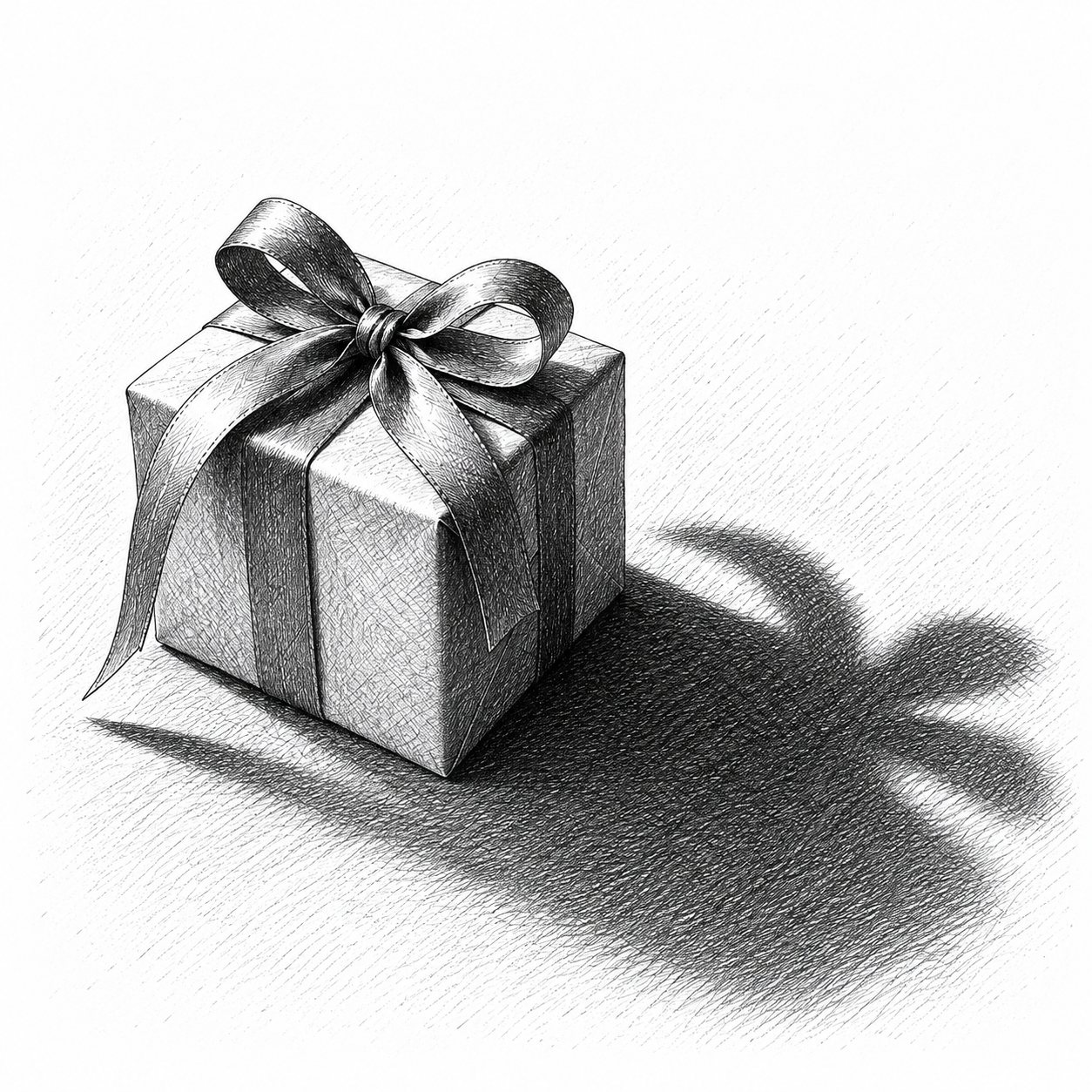
The Shadow of Being a Therapist
What happens when a therapist becomes too good at understanding
-
One of the consequences of becoming a therapist is that you become very good at understanding people.
At first, this seems entirely positive, but then at one point you realise that you have started loosing the focus on trusting your own gut intuition.
We get so good at learning to look beneath behaviour rather than react to it. We become very skilled at being curious about what lies underneath anger, defensiveness, withdrawal, criticism, or control. We learn to see the frightened child beneath the harsh words, the protective strategy beneath the difficult behaviour, the wound beneath the symptom.
Over time, this way of seeing becomes second nature to us.
Don’t get me wrong, it is a beautiful thing as it allows us to hold complexity.
It helps us move beyond simplistic judgements about ourselves and others. It invites compassion where there might once have been blame. It allows us to recognise that people are often doing the best they can with the resources available to them.
This capacity to understand is one of the great gifts of therapeutic consciousness.
And yet every gift carries a shadow.
The shadow emerges when ‘understanding becomes a substitute for discernment.’
When we begin to explain instead of seeing.
When curiosity replaces clarity.
When empathy quietly overrides our own knowing.
As therapists, we spend years learning how experiences shape people. We understand attachment wounds, trauma responses, nervous system adaptations, protective strategies, and unconscious patterns. We know that difficult behaviour rarely appears in a vacuum.
The controlling person may be frightened.
The critical person may be deeply ashamed.
The avoidant person may be protecting an old wound.
The angry person may be carrying years of hurt.
Often, these things are true.
But there is an important distinction that can become blurred.
Understanding why someone behaves as they do is NOT the same as deciding whether that behaviour belongs in your life.
Somewhere along the way, many of us become so skilled at understanding that we lose contact with our capacity to judge.
Not judge in the sense of condemnation.
Judge in the sense of discernment.
The ability to recognise what is actually happening. The ability to acknowledge patterns. The ability to say, “This behaviour is not healthy for me.”
The ability to choose.
I suspect many therapists stay in situations with people inside and outside of the therapy room longer than they need to because they can see so many sides of the story.
We understand the person’s childhood.
We understand their fears.
We understand their limitations.
We understand the circumstances that shaped them.
And because we understand, we continue to give the benefit of the doubt.
Then another chance. And another. And another.
Understanding can become a subtle way of postponing reality.
The turning point, for me, came through recognising the difference between two statements:
“I understand why you do this.” and “I do not want this in my life.”
These statements are not opposites.
In fact, they can coexist.
One does not cancel the other.
I can understand why someone lies and still choose not to trust them.
I can understand why someone becomes controlling and still choose distance.
I can understand why someone repeatedly crosses boundaries and still decide that the relationship no longer works for me.
Compassion does not require participation.
Insight does not require proximity.
Understanding does not remove consequence.
The Stoics understood this well.
Marcus Aurelius encouraged compassion for human frailty, but he did not advocate endless tolerance of harmful behaviour. He recognised that wisdom requires us to see things as they are, not as we wish them to be.
Reality remains reality, regardless of how much we understand its causes.
There is a similar thread running through the writings of St. Teresa of Avila.
Despite her profound compassion, she was remarkably practical. Again and again, she advised her nuns not to confuse spiritual aspiration with reality. She encouraged them to see clearly, to be honest about what was actually happening, and to avoid being carried away by wishful thinking.
Love, for Teresa, was not sentimentality.
Love was reality met honestly.
Perhaps this is where therapeutic consciousness must mature.
Not into less compassion, but into wiser compassion.
A compassion that is capable of seeing wounds without becoming blind to behaviour.
A compassion that remains open-hearted without abandoning discernment.
A compassion that honours both understanding and truth.
Because there comes a point when no further explanation is needed.
No deeper insight.
No additional perspective.
No more understanding.
There comes a point when what is required is a decision.
Perhaps maturity is not the abandonment of compassion.
Perhaps maturity is compassion that has learned how to see clearly.
The Tibetan Buddhist tradition has long taught that a bird requires two wings in order to fly.
Wisdom and compassion.
Compassion allows us to recognise suffering, to understand the wounds beneath behaviour, and to meet ourselves and others with kindness.
Wisdom brings discernment. It allows us to see clearly, recognise patterns, acknowledge reality, and make choices that honour truth.
Without compassion, wisdom can become cold.
Without wisdom, compassion can become blind.
Perhaps this is the deeper invitation for therapists, healers, and all those drawn to understanding others.
Not to abandon compassion, but to balance it with discernment.
To understand the wound without excusing the behaviour.
To keep the heart open whilst seeing clearly.
To recognise that maturity is not choosing between wisdom and compassion, but allowing both wings to develop equally.
Only then can we truly fly.

Humiliation. The Doorway to Humility?
When the collapse of self-image opens the way to truth
-
Humility is a concept most of us are familiar with, yet far fewer of us know it as a lived, felt experience.
It is often mistaken for qualities that represent something akin to being less loud, keeping the peace, becoming smaller, or quietly stepping aside. And funnily enough, we often admire people when we see those qualities and perceive them to be humble, but what we may actually be witnessing is self-abandonment.
In parts language, this can be another sophisticated manager, doing its best to keep us socially intact.
But real humility is actually the willingness to be seen as we actually are in any given moment, not diminishing or editing ourselves to be who we think we should be. Real humility is being able to say things such as “I don't know,” “I got that wrong,” “That really hurt,” “I'm struggling,” “I'm not as far along as I imagined.”
This way, we’re not performing acts of modesty, but telling the truth of what is really there in any given moment.
Humility is the practice that becomes possible when we stop protecting an identity at all costs. The fear of humiliation is the nervous system’s resistance to losing that identity.
I was sitting in a spiritual discourse many years ago, and one of the students asked the teacher, “How do we know if the teachers we follow are the genuine article?” The teacher’s reply stayed with me:
“There are only two things you cannot fake as a teacher: humour and humility. If they have those two qualities you can’t go far wrong.”
At the time, I laughed, as I hadn't expected to hear that, but now, years later, I think I understand.
Humour requires a certain humility, as we can only genuinely laugh when we are no longer trying so hard to protect an image of ourselves and are not afraid of being seen as imperfect.
Humility is much the same.
We can try to perform it for a while, but eventually someone or something will challenge the image we’re so tightly protecting. This will happen when we feel criticised and misunderstood, corrected, or when someone else shines more brightly than we do, and the part can no longer deliver its performance of humility.
A fragile ego needs to defend itself as it hopes desperately to be admired, as we are so attached to our image and how we are seen.
I know how it feels to sit in front of my clients, and recognise the part of me that believes, as a therapist, I need to be seen as regulated. You may know it in different ways, perhaps as a teacher who feels they always need to be right, or the spiritual practitioner who is beyond being triggered. The list goes on.
Early in my career, I remember sitting with a new client whose childhood experiences were far more complex than anything I’d yet encountered. Although I was equipped for the work, I wasn’t yet confident and could feel my own uncertainty. Another part of me was compensating by working hard to figure out exactly how I was going to help them, wanting to prove, that I was capable and good enough..
At one point they paused and asked, “Is this okay for you?”
Wanting to reassure them, I believe I replied with something like, “Yes, absolutely. I’m completely fine. This is no problem for me, so please don’t worry at all and carry on.”
As I said those words, another part of me knew that they weren’t coming from the whole truth. I remember feeling strangely exposed inside, and noticed myself becoming slightly disembodied, a little spacey. I wasn’t lying, but I was editing myself. It felt too humiliating to acknowledge that I wasn’t feeling as confident as I believed a therapist ought to be, and I didn’t want this to be seen by my client at all.
Looking back, I can see that what my client most needed wasn’t reassurance that I was unaffected. They needed my presence. They needed someone willing to pause and acknowledge the depth of what they were sharing. To be human together.
Today, I imagine I might simply say, “Your story is deeply moving. Let’s just take a moment to be with this together before we continue.”
Nothing dramatic happened with that client. Through supervision, with experience and over time, I gradually found the courage to notice that the less I tried to appear like the therapist I thought I ought to be, the more genuinely present and human I became. I discovered that humility wasn’t about appearing confident; it was about remaining truthful enough to stay in relationship.
Have you noticed in yourself that when you feel exposed or challenged, you also start over-explaining, defending, subtly repositioning yourself?
This is our parts attempting to manage the story, rather than simply living the truth of what there is in that moment. Many of these protective reactions are attempts to avoid humiliation…
We are trying to escape the possibility of being exposed in a way that threatens our sense of belonging, our worth, or our identity. It feels unbearable to feel the fear of being exposed, rejected and diminished or being seen to be wanting for anything!
From an evolutionary perspective, this makes sense. For most of human history, exclusion from the tribe carried real survival costs. To lose your place in the group often meant losing protection, resources and, in many circumstances, life itself. Our nervous systems evolved to become exquisitely sensitive to rejection, shame and social exclusion.
Perhaps that is why criticism can hurt so deeply. Why misunderstanding can feel unbearable. Why humiliation can feel like annihilation.
Humility asks us to remain open exactly when our biology wants to defend.
Standing on the ground
I find it interesting that humility and humiliation share the same Latin root: humus. Earth. Ground. Maybe this isn’t such a surprise, in some ways.
Humiliation is being brought to the ground against our will, wounding our dignity and leaving us wanting to escape.
Humility is choosing to stand on the ground of reality, with a willingness to let go of the image we have been defending, and discovering we remain whole.
Humility is the truth in being honest with each given moment as it is, simply standing where we are.
We’re so afraid of being humiliated that we do everything in our arsenal to avoid it – and yet the antidote is having the courage to feel the humility and meet ourselves, each other and life itself, exactly as we are.
And each time we do this, we gain more capacity and tolerance to trust in the process. The result is we begin to feel more and more worthy of belonging; paradoxically, the exact opposite of the fear we spend so much energy trying to protect ourselves from.
We discover that truth itself has been welcoming us home all along.

Fluent in Theory, Fumbling in Practice
Knowing the Way, Still Learning to Walk It
-
I’m now 54 as I write this article, and for most of my life I’ve immersed myself in spirituality, therapy and personal development. I’ve read many books, spent many of my earlier years living in ashram communities, attended countless trainings, and had the privilege to sit and learn with some extraordinary teachers.
But despite all of this, I still stay up too late when I know I should close my eyes. I still make up excuses if I’m too tired to meditate, and still notice anxiety taking hold despite understanding exactly how anxiety works – especially now, in my menopausal years.
It has never been easier to acquire knowledge. We have almost unlimited access to information, at our fingertips, at every hour of the day. Where once I might have walked in nature and simply connected with my surroundings, I now often find myself putting on a podcast while walking the dogs. All this information can feed that curious part of me – yet just having the information doesn’t necessarily change our way of being.
Many of us have a sense of what healthy boundaries feel like, and what compassion and presence look like. We may practise and try to live by these qualities every day. But when life throws us a curveball, everything we know gets put to the test and often thrown out the window entirely.
It's easy to value a boundary, feel compassionate, or stay present right up until someone we love gets hurt, we're the one who's acted without kindness, or an old wound is unexpectedly touched.
Those moments don’t reveal a lack of intelligence. They reveal where our practice has, and hasn’t yet, reached.
I can see this clearly in my own life.
For many years, meditation was so important to me and I couldn’t go a day without spending at least two hours on my cushion. I accumulated hours of formal practice, went on retreats for days and sometimes months on end, slowly developing incremental change. I had very few responsibilities back then, and didn’t appreciate the benefits.
Eventually, in my thirties, I returned to the UK and entered a busier, more Western way of life. I studied different therapies, sat with clients, taught, ran a business and took care of a family household. Meditation never disappeared entirely, but it became far less regular.
At first, nothing much seemed to change. I was still living on the interest of an investment I’d made years earlier with the perspective, stillness, and trust those years had given me. What I hadn’t yet understood was that some capacities need to be continually nourished, or they quietly stop deepening.
Then menopause arrived :-) My sleep became less predictable. Anxiety visited more often and my body seemed quicker to react and slower to settle. It showed me that I’d quietly begun living from yesterday’s practice rather than today’s. I’d forgotten the power and value of an ongoing regular practice.
We feel this same thing in smaller ways too: hearing a story that lands harder than we expect, an old history gets remembered, noticing ourselves brace or drift slightly before we even realise we’ve left our centre.
When the nervous system detects threat, our attention tends to narrow. Familiar protective responses can become more readily available, while reflection, perspective and conscious choice become harder to access. This is one reason we may understand boundaries beautifully in the quiet of a therapy room, yet struggle to hold one during a painful conversation with someone we love.
Under pressure, we don’t simply draw upon what we know. We often draw upon what has become most familiar. The nervous system is shaped not only by what it understands, but by what it repeatedly experiences.
In Outliers: The Story of Success, Malcolm Gladwell popularised the idea that mastery requires roughly ten thousand hours of practice. The research behind that figure is more nuanced than the headline suggests, but I think the underlying principle still points us somewhere important.
We can’t become a concert violinist just by reading music, or a great surgeon just by memorising anatomy. Our bodies need repetition. They need gradual learning, built through tiny adjustments, countless corrections, and years of simply showing up.
Our inner lives are no different. Reading about compassion isn’t the same as remaining compassionate when someone misunderstands us. Understanding the nervous system isn’t the same as regulating our own frightened nervous system in the moment. The body has to learn this differently from the intellect – through experience, through repetition, and through relationship.
The nervous system is shaped by what it repeats, not by what it understands
Researchers studying habit formation have found real variation in how long a new habit takes to feel established. Some habits settle within weeks, others take many months, but on average, people needed around sixty-six days of consistent repetition before a behaviour began to feel relatively automatic.
That makes intuitive sense to me as most of our protective patterns weren’t created by a single experience; they were repeated hundreds, sometimes thousands, of times. Why would we expect them to soften after one insight alone? And repetition itself seems to become even more powerful when it involves the whole person, not just the thinking mind.
We can recruit all our senses to help this happen by picking up a pen and writing an intention by hand, speaking it aloud, saying it quietly to ourselves, imagining what it would feel like to live it, then practising it again in ordinary life. When all the senses are involved at once, the learning seems to lock into the nervous system more deeply.
What am I practising often enough for it to become available when I need it?
Meditation, loving-kindness, breathwork, therapy and embodied practices cannot promise that we will never lose perspective or become overwhelmed. What they can offer is something more realistic: the capacity to notice a little sooner, remain a little steadier and find our way back more quickly and much more kindly.
As I write these pieces, I increasingly realise they aren’t simply ideas I want to share. They’re practices I keep returning to myself. Little by little, we become what we repeatedly return to. I find that both deeply humbling, and quietly hopeful.

A Wolf in Sheeps Clothing
Why Calmness can mislead us
-
Recently, during a disagreement, someone said to me:
“Elise, can you see that you’re speaking from anger while I’m coming from a calm place?”
That comment riled me.
Not because I disagreed that I was angry. I was angry. I was frustrated by the missing that was occurring between us in that moment.
Anger can absolutely narrow perspective, and mine certainly has at times. But in this moment, what unsettled me was something else.
What unsettled me was that there was a subtle superiority hidden inside the statement. An assumption that because I was angry, my perspective was somehow less trustworthy, while their calmness made theirs more so.
That moment gave me the impulse to give more attention to something that I have noticed many times over the years:
How readily we equate emotional appearance with truth.
We grant authority to calmness and become suspicious of anger, as though one reveals wisdom and the other obscures it.
I believe this is a rich and interesting topic to bring to light - particularly within therapeutic and spiritual communities.
Calm is not always Self and Anger is not always a loss of perspective.
The Problem with Appearances:
The same outward behaviour can emerge from very different inner states. Behaviour tells part of the story, but it rarely tells the whole story.
Human beings are far more complex than that and the same outward behaviour can emerge from very different inner states.
Not All Calmness Is the Same:
When we are with someone who is truly calm and grounded, we can often feel it in our own body. Their presence brings a sense of space, no urgency, no pressure, no need to convince or be convinced. They can listen, disagree, soften, and stay connected. There may be Anger, Sadness and Fear present, but we can feel that none of them have taken over.
We have also met people whose calmness felt contracted. Everything composed on the surface, yet underneath a rigidity, a distance, a subtle judgement.
The nervous system can become quiet because a person is deeply grounded, but it can also become quiet because a person has disconnected from their feelings. Many dissociated and frozen states can be mistaken for calm. From the outside, those two things can look remarkably similar.
From the outside, those two states can look remarkably similar.
Not All Anger Is the Same:
Some anger overwhelms and it attacks, blames, dominates, and very often loses perspective.
Some anger is simply information! It is telling us that something matters and that some boundary feels crossed, and something important needs attention. In those moments, anger is not the opposite of awareness but it is part of awareness. A person can be aware of their anger without being controlled by it, and with a practiced and welcoming awareness, this can be bring such a gift of clarity.
Some anger is cold anger, I remember this from growing up, and how confusing that was. Because not all anger is loud, but it can become eerily quiet, passive-aggressive, or superiority, or the persistent need to be right. Some wraps itself in the language of care:
“I’m just trying to help you see what’s happening.”
“I’m simply being objective.”
“I’m noticing that you’re blended.”
Sometimes these observations are genuine - Sometimes they are not.
The point I am getting to is that what you see is not always what you get!
What Matters More Than Emotion
If we can’t rely on emotional appearance alone, what can we look for?
I find it more useful to be curious about someone’s relationship with what they are feeling and most importantly, whether they have choice. Can they stay curious in disagreement? Can they acknowledge uncertainty? Can they remain open while holding a strong position? Can they stay connected even when something lands hard?
These qualities tell us far more than the emotion itself. And this applies as much to how we relate to our own emotions as to how we read others.
Which is why I’ve come to think the question is not “Am I in Self?”, a question that can itself become a way of performing composure rather than embodying it. The more honest question might be: “Do I have choice in how I’m relating to what is here?”
That question feels much more powerful as it doesn’t ask us to eliminate our humanity, but asks us to bring awareness into relationship with what we are truly feeling, rather than trying to become who we think we should be.
When we stop trying to feel how we think we should feel, we can begin to welcome what is actually here. It takes courage to stay present with our experience before we try to fix it, transcend it, or explain it away. Our egos often rebel against this! Yet, paradoxically, the more willing we are to remain with what is, the more naturally presence emerges.
The Truth We Cannot See
Sincerity and truth are not the same thing
-
One of the more humbling discoveries of my 54 years is being completely sincere and only occasionally right. From the inside, the two feel identical.
I have defended views that later changed, judged in others what I could not yet see in myself, and mistaken my own perspective for the truth of another person's experience.
This is not a confession of being uniquely flawed, but a simple acknowledgement of what it is to be human.
And the older I get, the less interested I become in the question, “Am I right?” and the more interested I become in the question, “What else can I see here, what is invisible to me?”
So today I am sharing my reflections on truth, informed by both my own experience and the wealth of literature that suggests none of us encounter reality directly.
“We encounter our version of truth in each moment depending on who and where we are.”
Many things effect the lens in which we see this, such as through: our age, our attachment history, our temperament, our culture, and our nervous system. Through what has happened to us, and what has not.
For example:
A child raised in unpredictability often learns to scan for danger before safety.
A child raised in emotional neglect may become exquisitely sensitive to rejection.
Someone who has experienced betrayal may see threat where another sees possibility.
Someone who has lived through scarcity may experience abundance differently from someone who has never known want.
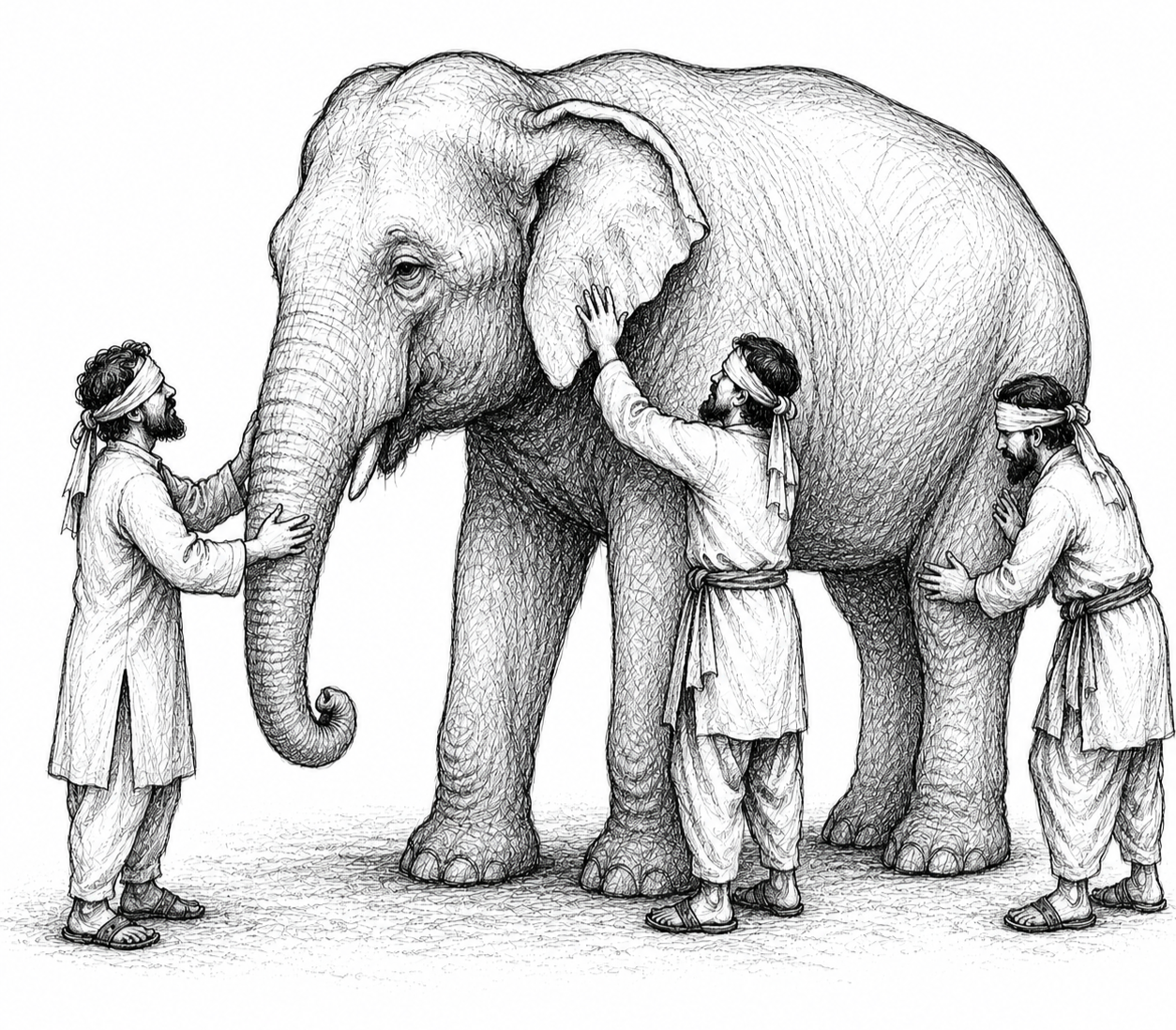
There is an old story of three blind men encountering an elephant for the first time. One feels the trunk and concludes an elephant is like a snake. Another feels the leg and insists it is like a tree. Another touches the ear and believes it is like a fan.
Each is describing something very real, but in that moment neither can see what the other sees. Neither person is lying, yet neither is seeing the whole picture.
I believe much of human conflict emerges from forgetting this simple fact.
The Stoics wrote of this perspective:
Epictetus repeatedly pointed towards the distinction between events and our interpretations of them.
Modern neuroscience reaches a similar conclusion:
The brain is not a passive recorder of reality. It is constantly predicting, filtering and interpreting experience. We do not simply see what is there; we see what our organism has learned to notice.
Perhaps this is another reason why humility is so important. Not thinking less of ourselves, nor more of ourselves, but recognising that any fixed view of reality will always be incomplete. Humility is not claiming the truth, but remaining in relationship with it.
One of the things I have come to appreciate through therapy, spirituality and simply everyday living is that we are not always seeking truth, even though we may think we are. More often than not, we are seeking safety.
This is because certainty feels safe and uncertainty doesn’t. It is often easier to cling to certainty than remain open to uncertainty, and easier still to divide the world into those who are right and those who are wrong.
There is something of a cosmic irony in this, because uncertainty is woven into the very fabric of life. Perhaps that is one of the closest things we have to an ultimate truth!
Yet resting in uncertainty can feel profoundly uncomfortable, especially at the beginning. As human beings, we will often do almost anything to avoid that discomfort because uncertainty challenges our need to feel safe, certain and in control. It asks us to loosen our grip on the identities, beliefs and explanations that help us make sense of ourselves and the world around us.
I’m sure you have noticed how unsafe you feel when someone challenges your opinion or disagrees with something you care deeply about? I know I certainly do!
For many of us symptoms present themselves immediately as the body reacts before the mind.
The jaw tightens.
The chest contracts.
The belly hardens.
A counter-argument begins forming before the other person has finished speaking. We feel attacked.I have definitely stood in the shower for an extra few minutes, presenting my case to the invisible audience in my mind, complete with all the evidence, explanations and brilliantly persuasive arguments proving that I am right and they are wrong :-)
Yet if we pause and ask, “What exactly is under threat here?” we often discover it is not truth at all, but an identity we are trying to protect. Beneath the surface, we may find different protective parts holding that role for us:
The competent one.
The intelligent one.
The therapist.
The spiritual one.
The good one.
The one who understands.In parts work, protective parts do not only defend old wounds; they also defend the identities we have built around ourselves.
The protectors running the show rarely announce themselves as fear, but are often remarkably sophisticated. More often they arrive disguised as certainty, wisdom or righteousness, carrying a strong conviction that we are finally seeing clearly!
Ironically, the moment that happens, curiosity begins to disappear, and learning, openness and receptivity becomes difficult.
Richard Rohr writes about the movement from first-half-of-life consciousness into second-half-of-life consciousness.
Whether or not we follow his framework exactly, many people recognise the shift.
In the first half of life we build.
Identity.
Belonging.
Achievement.
Understanding.In the second half of life, reality begins dismantling some of what we have built.
Relationships end.
Bodies age.
Children leave home.
Plans unravel.
People disappoint us.
We disappoint ourselves.At first this dismantling can feel frightening, yet hidden within it is a deeper freedom and that is the recognition that truth is not something we possess.
It is something we participate in as we cannot see Truth Alone.
The truly wise often become less certain, not because they know less, but because they have encountered the vastness of what they do not know.
Perhaps one of the great gifts of therapy and contemplative practice is not that they provide all the answers, but that they help reveal our blind spots and soften certainty into curiosity.
THIS REQUIRES COURAGE
I put that in capitals because it really does take courage to stay open to not knowing, to remain present with uncertainty, and to trust what the next moment may bring.
The gift of this is that some of life’s most important moments, even without guarantees, arrive through uncertainty, such as falling in love, becoming a parent, ending a relationship, facing illness, changing direction and growing older.
Freedom begins when we can be humble enough to recognise that reality may be larger than our current understanding.
Again this takes courage, as it’s not freedom from emotion or freedom from disagreement. But freedom from the compulsion to defend every thought, every opinion and every identity as though our survival depends upon it.
So when our ‘truth’ is next challenged and we start to notice contraction can we find the maturity to say:
“This is how it looks from where I stand, and I may not be seeing the whole picture.”
A good litmus test is:
If standing in our truth makes us more rigid, more defensive and more superior, it may be worth pausing.
If what we call truth makes us more humble, more responsible, more courageous and more capable of remaining in relationship with those who disagree with us, perhaps we are moving closer to something real.
The paradox is that truth often becomes clearer when we loosen our grip upon it, and deeper when it becomes a relationship.
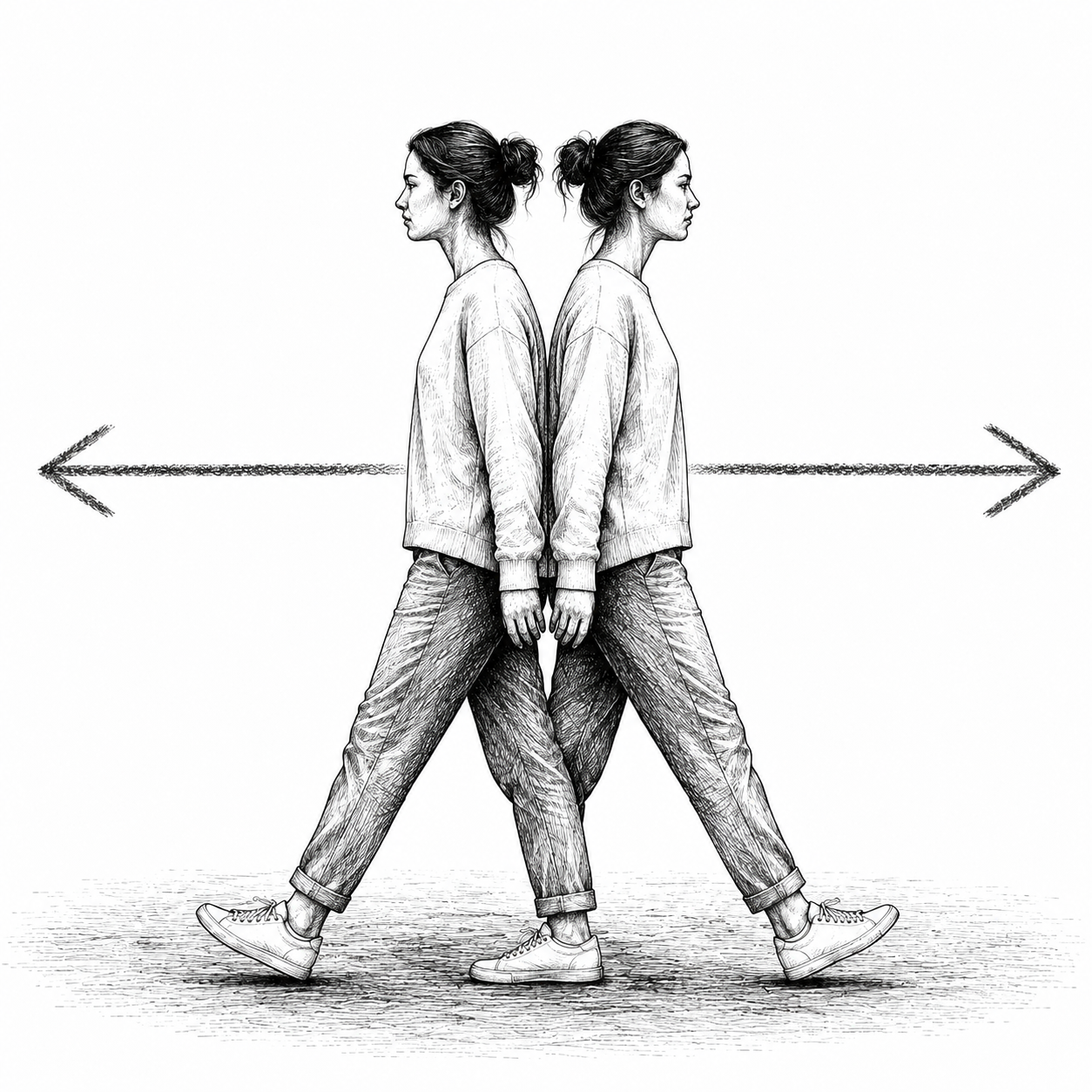
When Healing Feels like Going Backwards
The paradox of becoming more aware, not more wounded
-
How many of you have noticed that there often comes a point in therapy, meditation, or any serious inner work when things seem to get worse?
People describe feeling more sensitive, less resilient, and as though they no longer have the thick skin they once had. They find themselves more affected by criticism, disappointment, conflict, uncertainty, or social situations that previously seemed manageable. It can feel confusing and discouraging and at times, bring up anger and grief for what was lost. Some even begin to wonder whether therapy or personal growth has somehow made them weaker.
However, when this process is met with enough support, this is an important milestone in the healing process.
What we are often experiencing is not regression.
It is uncovering.
Many therapeutic and contemplative traditions describe a similar phenomenon. In Internal Family Systems, protective parts begin to step back, allowing more vulnerable parts of ourselves to emerge. In Somatic Experiencing, Peter Levine speaks about increasing our capacity to stay present with sensation. Meditation traditions often describe how deepening our awareness does not immediately bring peace, but instead reveals more of the restless activity of the mind that had previously gone unnoticed.
When I tried to find a metaphor for this healing milestone, I kept returning to the idea of a bridge. The bridge being how we reach out to meet life, enter relationships, express ourselves, and move towards what matters to us.
For much of our lives, only certain parts of us had been allowed on that bridge. For example it could have been the competent one people met or maybe our perfectionist. Or maybe our social part or our likeable care-giver and helping part.
We had skilfully found a way to navigate the world that helped us avoid difficult feelings as much as possible. Yet in doing so, we had also exiled other parts of us which meant our sensitivities had remained hidden in the background.
‘Love is the bridge between you and everything’ by Rumi
As we develop greater Self-awareness on our healing journey, the bridge begins to widen. With that increased capacity, more of us is able to step onto the bridge - not only our strengths, but also our sensitivities.
For example, much of my life I had relied heavily on my social part. It was warm, fun, curious, and genuinely interested in people. It helped me backpack around the world, build friendships, develop a therapy practice, and eventually teach and lead groups.
Most people would probably have described me as confident, and for many years I would have described myself that way too.
What I did not realise was how much that part was carrying the show.
As meditation, therapy and self-reflection deepened, I started to understand and get to know this part of me. My outgoing personality had served me well. I had attended six different schools during my childhood, due to moves and my parents being in the RAF. I realised that being socially capable, funny and engaging had been a great way to secure connections in new and unfamiliar places. It made sense to be sociable rather than feel the real vulnerability of being 'the new girl’ again.
As my sense of Self grew, the pressure to be this part shifted and more space opened up in my system. With this however, the younger parts of me began to emerge and I began to feel more vulnerable and uncertain in new situations.
All the fears of worrying about being judged, not liked, not fitting in and getting things wrong came up and I started to feel the sensitivity of my system now that I didn’t have the social protective system running the show.
I remember the intensity of this lasting for a good long while and jokingly ( and sometimes not ) saying to friends that I wished I had never started all this because I felt much more confident and carefree beforehand! :-) I hear clients say some version of this regularly.
In reality, of course, we are not becoming more fragile, we are becoming more aware.
At first this feels uncomfortable, and sometimes painfully so. In my case, I found a part of me that still believed that being healed meant reaching a point where I should feel okay ALL the time. Believing that with enough meditation and self-awareness practices, it would somehow exempt me from feeling the messiness and pain of being human.
Life ultimately though, has turned out to be a much better gift and teacher than that.
What I have helped worried parts learn is that fear, uncertainty, awkwardness, disappointment, and vulnerability are not signs that something has gone wrong. They are part of the human condition.
Many of our younger parts never learned this. They learned that discomfort and vulnerability were dangerous, shameful or overwhelming. They were feeling life’s joys and hurts through an open and sensitive system, and were often left to navigate experiences that felt too much, too soon, and too confusing all alone.
The sensitivity was never the problem. Being alone with it was.
Clients often arrive at this stage convinced they are going backwards, because life genuinely feels harder. What we are witnessing is not failure, but a growing awareness of the whole self as we are seeing parts that are finally becoming visible.
Sensitivity is part of what makes us human. It is what allows us to love, to grieve, to care, to connect, and to be touched by life.
Healing, in this case, is about cultivating the capacity to be present with the parts of us that feel the joys and sorrows of life, bringing wisdom and compassion to their experience as they find their place on the bridge.
I have since learned to treasure these moments because they remind me that I am no longer turning away from my experience. In staying present with what is here, we rediscover choice and the fullness of being alive.
NB It feels important to add that increased sensitivity is not automatically a sign of healing. At times we can become overwhelmed, dysregulated, or lose our footing. The aim is not simply to feel more, but to develop the capacity to remain present with what we feel.
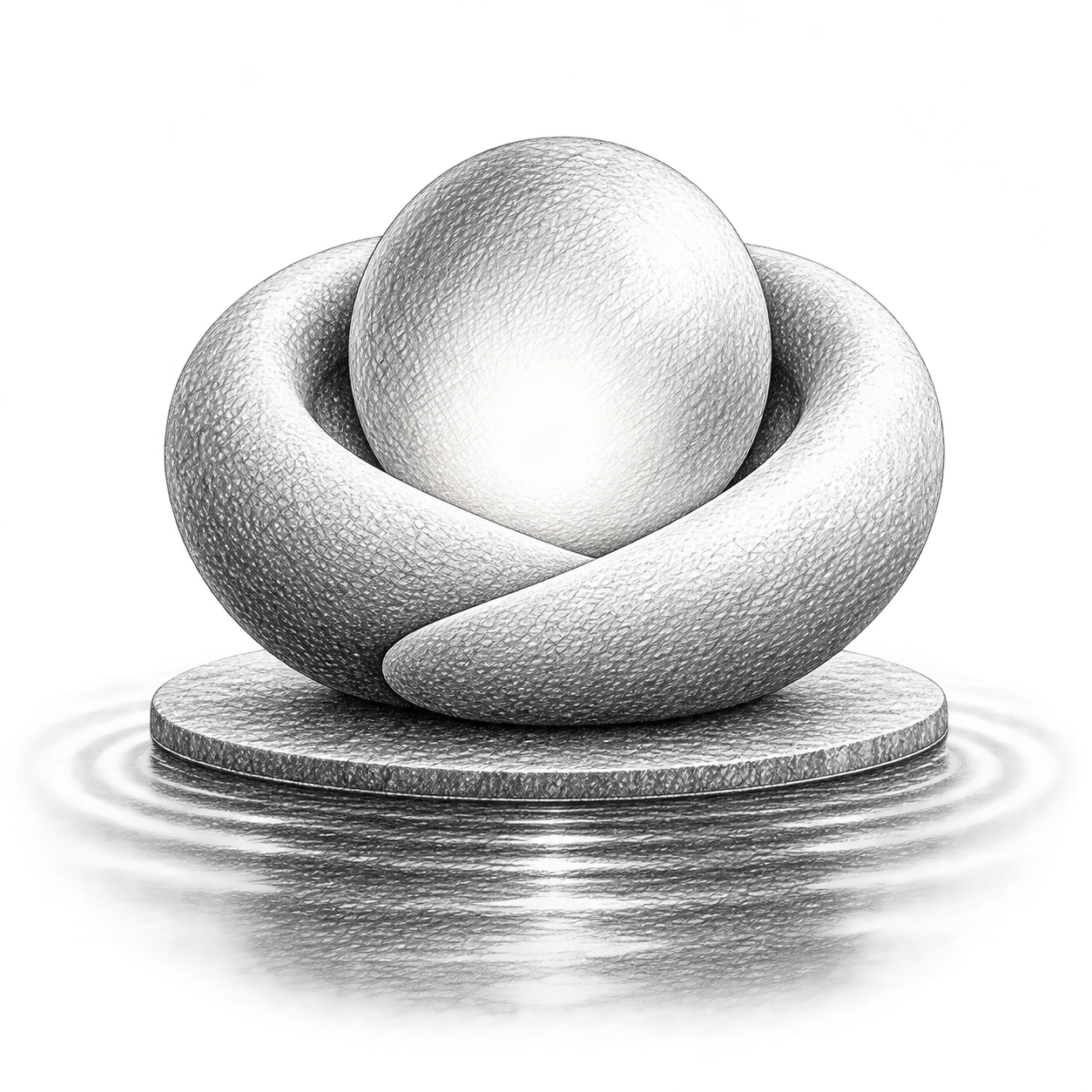
The Idealisation of Self
When Being in ‘Self’ becomes another ‘Should’
-
There’s a shift I sometimes notice in conversations about Internal Family Systems (IFS), where the question begins with “Can I meet what is here?” and then, after a while, turns into “Am I in Self?” and sometimes, more subtly and judgementally, “Are they in Self?”
This is not what I understand IFS to be teaching. The model does not ask us to get rid of our parts or to remain permanently unblended in some pure ‘ideal’ of Self. Rather, it invites us into a relationship with them, with curiosity, compassion and honest dialogue.
Unfortunately, though, I think this invitation to relate with our parts can become confused, and Self can start to look like somewhere we should arrive, a way we should feel, or the kind of person we ought to become. It can gradually become a standard we use to measure ourselves and, sometimes, each other.
I think this is something that can happen whenever human beings discover a powerful therapeutic or spiritual idea. The teachings can slowly become idealised and, often without realising it, we can turn something that was intended to help us into something we believe we should become.
When a Liberating Idea becomes “The Answer”
Psychological and spiritual models often offer us a new way of understanding ourselves, our suffering and the possibility of happiness.
IFS has offered a profound way of understanding ourselves, and I have witnessed extraordinary healing through the work, both personally and professionally. What interests me here is what can happen when we get attached to something so helpful and powerful in our pursuit of healing and happiness.
I have lived this experience before.
In my twenties, I spent several years living in a spiritual community in South-East Asia, pursuing what I believed was the path to enlightenment. Like many seekers, I was drawn by a sincere longing for truth, freedom and understanding.
The community began with genuine openness and exploration. We were diligent practitioners, and the practices were producing powerful experiences. Many of us felt that we were discovering something extremely valuable, and it was deeply inspiring. But over time, “We have found something that helps” gradually became “We have found the truth.”
We became less interested about other perspectives and more convinced that our way was the best way. We began to believe that we had “the good karma to find the truth.”
It feels deeply human to long to find the right thing, the right teaching or the right path. Certainty can give us a sense of safety and belonging. Yet we must be careful of becoming too certain that we have the answer, as we can start to become exclusive and a sense of - ‘are you in or out of the club?’
IFS has grown like wildfire around the world for many, many good reasons. With that growth though can come misunderstandings of the model, including a subtle belief that we should always be in Self, and that being blended with our parts somehow can mean we are less healed.
Once Self becomes the ideal, a subtle hierarchy can follow. The language may still sound compassionate and curious, but underneath it, we may begin assessing how Self-led someone else is or/and how much authority their perceived level of Self-leadership should give them.
The danger of Idealising Self is that people can begin moving away from their own honest expression of wholeness - their own authenticity and diversity. We can start manicuring and presenting a version of ourselves that appears more Self-led than we actually feel.
Instead of acknowledging anger, fear, hurt or confusion, we attempt to become the person we think we ought to be. What appears composed and therapeutic on the outside may create an increasing distance from what is genuinely happening within.
Yet this is often the very trap that brings many of us into therapy, spiritual practice and healing communities in the first place: ‘the belief that who we are right now is somehow not enough.’
When we idealise a model, we risk recreating that belief inside the very space that was intended to free us from it and the more sophisticated the protector becomes, the harder it may be to recognise what is happening.
This is one reason I have become cautious when “being in Self” is invoked as evidence that one person’s perception is clearer, wiser or less partial than another’s. The claim can begin to confer authority and certainty, making that person’s perspective more difficult to question.
The Shadow of Every Community
This tendency is not unique to IFS, nor does it suggest that there is something wrong with the model. We find it in religious communities, political movements, therapeutic schools and spiritual traditions alike.
A community remains alive when it can say, “This perspective may be useful,” while continuing to welcome questions. It begins to lose humility when “a perspective” starts to become “the perspective,” and questions start to feel like threats.
I once read a slogan on a wall of a healing centre I visited that stayed with me:
“We are here to help change you. You are not here to help change us.”
That sentence contains something of the shadow of every community that has lost its capacity to be influenced by those within it.
Self-Leadership as Relationship
I believe healing is less about becoming an ideal and more about developing an honest relationship with what is present. Self-leadership, then, might be measured not by how rarely we become blended, but by our capacity to recognise when we are, meet ourselves there with compassion, and find enough space to choose how we respond.
Not to transcend our ordinary humanity, but to remain in relationship with it.
Held in this way, IFS remains genuinely liberating. Self is not another standard we must reach. It is the presence from which we can meet the parts of us that still believe we should be somewhere else.